
· by Michael Blair, Nashville's Garage Door
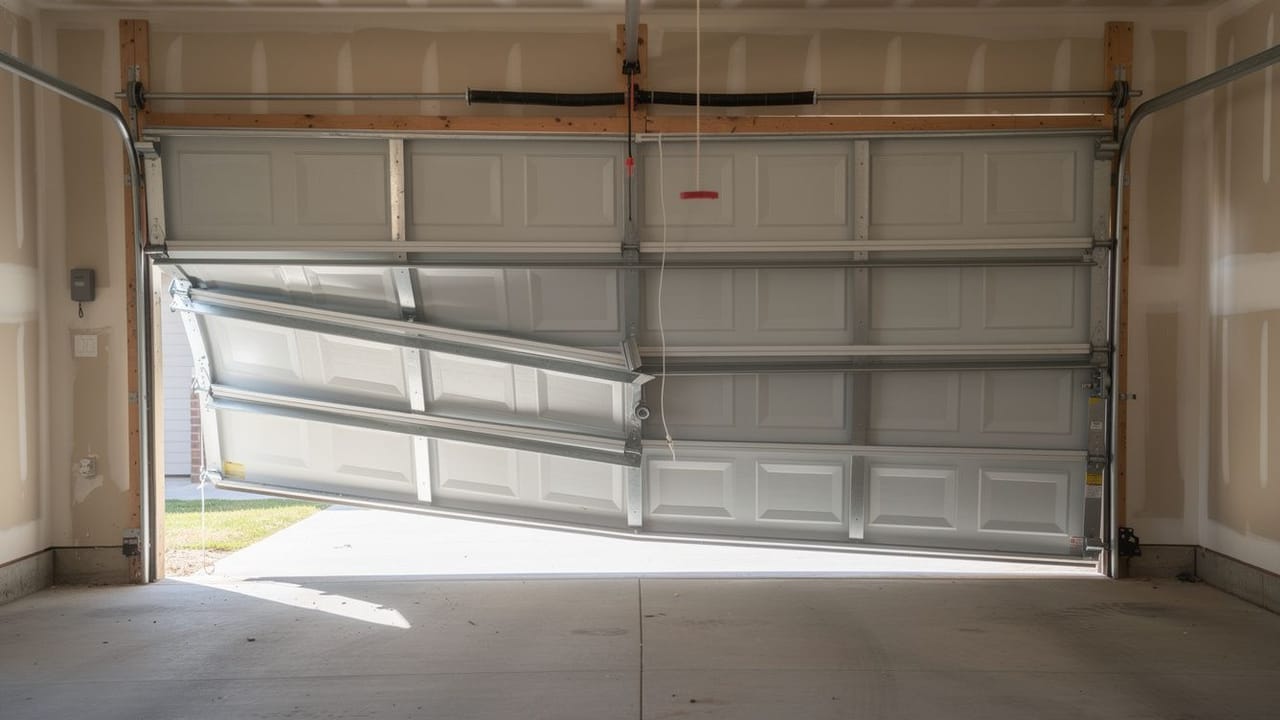
The searches people run here tell the story: garage door came off track, garage door keeps coming off track, how to put a garage door back on the track. A door that has jumped its rollers or hangs lower on one side than the other looks like it needs a push and a mallet. What holds it up is a set of springs wound or stretched to carry most of its weight, and a derailed door has already moved those forces somewhere they were not meant to go. This is what we tell people to do, and not do, between the moment the door goes crooked and the moment our technician arrives for an off-track and cable repair.
What should I do when my garage door comes off the track?
Stop operating it, leave it in the position it is in, and keep people, pets and cars clear of it until a technician has looked. The Door & Access Systems Manufacturers Association’s sheet for homeowners, DASMA Technical Data Sheet #174 (revised 2019), says that once a problem is seen, the checking should stop there, the door should not be run, and a trained technician should be called.
That means no more presses of the wall button or the remote to see whether it will sort itself out, and unplugging the opener is the simplest way to make sure nobody does. An opener pulling on a door that is already out of its track adds force to rollers, hinges and sections that are no longer guided, and the same DASMA sheet treats any binding, swaying or strain on those parts as a reason to stop.
If the door is stuck open, the house may be open with it, since for many attached garages around Nashville the garage door is the way most of the family comes and goes. Lock the door between the garage and the house, move anything valuable out of the garage if you can do it without passing under the door, and tell us when you call that it will not close. We can talk through the timing then on the contact page or by phone.
Why not push it back onto the track yourself?
Because the parts you would be pushing against are held by springs under extreme tension, and DASMA’s homeowner sheet tells building occupants not to remove, adjust or repair doors, springs or any other component, or anything they are fastened to. It goes further and names what not to touch on the spring system: the springs, the cables, the steel brackets and the wood lag bolts that spring parts attach to. Clopay’s garage door safety checklist says the same of the bottom brackets, where the lift cables meet the door: on a conventional door they are under extreme tension and can cause serious injury if someone without door experience loosens or removes them.
A roller that has left its track is rarely the whole problem. It came out because something let it, whether a bent track, a loose bracket, a worn roller or a cable that has slackened on one side. Forcing the roller back in leaves that cause in place and puts a hand or a shoulder next to a door whose balance is already off. A door that suddenly drops or swings on a slack cable is not something to be standing beside. The red emergency release is no exception: DASMA puts disconnecting the opener in an operating check that comes only after a clean visual one, and once released, a door that is off its track hangs on nothing but its springs and cables, which may be the very parts that failed.
The same goes for the springs themselves. If one has broken, the door is far heavier than it feels when the springs are doing their job, which is why we replace them as described on our spring repair page rather than suggest any home fix. We do not give step-by-step instructions for anything under spring tension, on this page or on the phone.
What can you safely look at while you wait?
You can look, from where you are standing and without touching anything, at the same things DASMA’s sheet asks a homeowner to check by eye. A few minutes of looking makes the call to us more useful, because you can tell us what you see instead of only that the door is crooked.
- Whether the door sits square in the opening or hangs lower on one side.
- Whether a vertical or horizontal track is bent, twisted or pulled away from the wall or the jamb.
- Whether rollers have come out of the track, and how many.
- Whether a lift cable near either bottom corner is hanging loose or has come off its drum.
- Whether any panel is creased, cracked or pushed in, which is common after a door has been bumped and is its own repair, covered on our panel repair page.
What does our technician check on an off-track door?
Our technician works through the points in DASMA’s companion sheet for the trade, DASMA Technical Data Sheet #175, revised in 2019. That starts with misalignment of the door to the track and of the track to the framing, then the track for loose fasteners and for twisting, bending or the track opening up. Each roller is checked for looseness or missing bearings, and its stem should turn and slide in its bracket, which tells us the stem and its carrier are not bent.
From there the sheet calls for a judgment on whether the door should be repaired or replaced, with particular attention to the sections, stiles, struts, hinges, rollers and fasteners. Often a door that came off its track needs a section of track, rollers or a cable, the work on our off-track and cable repair page, and goes back into service. Sometimes the damage to the sections is enough that replacing the door is the honest answer, and we say so with the reasons. If the framing around the opening looks doubtful, DASMA says a building contractor or design professional should assess it, and we tell you that rather than hang a door on a jamb we do not trust.
DASMA also lists high wind events among the reasons a door should be checked, which matters here when a hard storm leans on a closed door. Once the repair is done, the door is lifted by hand to confirm it is balanced and stays open, the opener is reconnected and its reversing feature is tested, the same checks we run on every tune-up and safety visit. If the door was making a grinding or popping sound before it came off, our post on garage door noises and what each one means explains what that sound usually pointed to.
Sources
- DASMA Technical Data Sheet #174, Building Occupant: Checking a Residential Sectional Garage Door for Damage (revised 2019) — Occupants should not remove, adjust or repair doors, springs or anything fastened to them; stop and call a technician when a problem is seen; what to look at by eye; the operating check and reversal test
- DASMA Technical Data Sheet #175, Trained Door Systems Technician: Checking a Garage Door for Damage (revised 2019) — Door-to-track and track-to-framing alignment; track deformation; roller checks; repair or replace judgment; high wind events; framing assessed by a contractor or design professional
- Clopay, Garage Door Safety Checklist — Conventional bottom brackets, where the cables from the spring system attach, are under extreme tension and can cause serious injury if loosened or removed by someone inexperienced; frayed cables need a professional
FAQ
Garage Door Off Track: What to Do and What Not To — questions
Why does my garage door keep coming off the track?
A door that leaves its track more than once usually has a cause still in place, such as a bent or twisted track, loose track fasteners, a track opening up, or worn and bent rollers. Putting the rollers back without fixing that cause means it happens again. Our technician checks each of those before the door is returned to service.
Can I put a garage door back on the track myself?
We advise against it. DASMA tells homeowners not to remove, adjust or repair the door, its springs, cables or anything fastened to them, because the springs hold the door under extreme tension. A derailed door is already out of balance, and it can drop or swing without warning. Leave it where it is and call a technician.
Is it safe to use the opener when the door is off track?
No. Once you can see the door is out of its track, DASMA’s guidance is to stop and not operate it. The opener keeps pulling on rollers, hinges and sections that are no longer guided, which can bend more track or crease a panel. Unplugging it is the simplest way to make sure nobody presses the button.
Should I pull the emergency release when the door is off its track?
Not on a door that is already off its track. DASMA lists disconnecting the opener as part of an operating check that only follows a clean visual one, and a derailed door has failed the visual check. Released from the opener, a crooked door is held only by its springs and cables, which may be the parts that failed.
Can a bent garage door track be straightened, or does it need replacing?
It depends on the track and how it bent. DASMA’s technician sheet calls for checking track for twisting, bending or opening up, then judging repair against replacement. A track that has been kinked or twisted generally cannot be trusted to guide rollers again. We look at it and tell you which it is before any work starts.
Why is my garage door crooked when it closes?
A door that closes lower on one side is often a sign that one lift cable has slackened, a track has shifted, or the door has moved out of alignment with its track. Look without touching for a loose or hanging cable near the bottom corners. Then stop using it, because a crooked door is one step from coming off.
Does a garage door off track mean the springs or cables are damaged?
Not always, but they are among the first things checked. A loose cable is one of the signs DASMA asks homeowners to look for, and a broken spring or slack cable can let one side drop and pull rollers out. Our technician inspects the spring system, cables and drums whenever a door has come off track.