
· by Michael Blair, Nashville's Garage Door
The garage door is one of the largest and heaviest moving parts of a house. DASMA’s guide to checking a residential sectional door, from the trade association of door and opener makers, describes doors as large, heavy objects moved with the help of springs held under extreme tension. It moves every time someone leaves or comes home, and it often gets no attention until it stops. Amarr’s page on maintaining garage doors and openers recommends a routine check twice a year to prevent accidents and damage, and most of what follows fits into that check. One test belongs on a shorter schedule, and a few parts belong to a technician, which is where our tune-up and safety service comes in.
Which parts of a garage door should be lubricated?
Amarr says to lubricate the moving parts of the door regularly and to keep lubricant off plastic parts, naming plastic rollers and idler bearings. It sends owners to the door’s own manual for the details, and that manual is the first place we look for which product goes where. When there is no manual, we use a garage door lubricant or a white lithium grease on the metal hinges and on steel rollers at the bearing. WD-40’s page for its white lithium grease lists door hinges, cables and bearings among its uses.
The track is where we go strictly by the door maker’s manual. That same WD-40 page lists overhead door tracks as a use for its grease, while Amarr’s page doesn’t say either way, so there is no single rule we would hand you. What we do on every visit is wipe the track clean and sight along it for dents and bends, because the rollers need to run through it freely.
Tighten and inspect
On a tune-up we tighten loose hinge and track bracket bolts and check that the opener is still firmly mounted. At home, the job is to look. DASMA’s guide has owners inspect the track for loose fasteners or misalignment and check that every roller bracket and hinge is properly attached and not loose, and it warns that any deformation of the panels, tracks or hardware can make a door questionable. It also tells owners not to touch, adjust or repair the springs or anything the spring parts are fastened to, such as lag bolts, steel brackets and cables. The bottom brackets that hold the cables fall in that group, so leave them alone.
Amarr lists springs, cables, rollers, pulleys and hardware as the parts to look over for wear, and says to call a qualified installer if problems are visible. Look at the lift cables from where you stand without touching them. If one is frayed or hanging loose, stop there, since DASMA’s advice is to end the inspection when any problem shows and contact a trained technician. That is the work of our off-track and cable repair crews.
- Lubricate the metal moving parts twice a year, never plastic rollers or idler bearings
- Follow the door maker’s manual on the track
- Look for loose hinges, roller brackets and track fasteners
- Look at the cables and springs without touching them
- Test the balance, and test the auto-reverse every month
Which safety tests should a garage door pass?
Test the balance first, then the auto-reverse. With the door closed, pull the red release handle to disconnect the opener and lift the door by hand. Amarr says to raise it 3 to 4 feet off the floor, where a balanced door stays open; one that won’t stay put is likely out of adjustment and needs a dealer. DASMA adds the caution we would give: lift slowly, only a few inches at first, and stop if the door is too heavy or hard to move. Adjusting the springs is never a homeowner’s job, and it is what our broken spring replacement crews do.
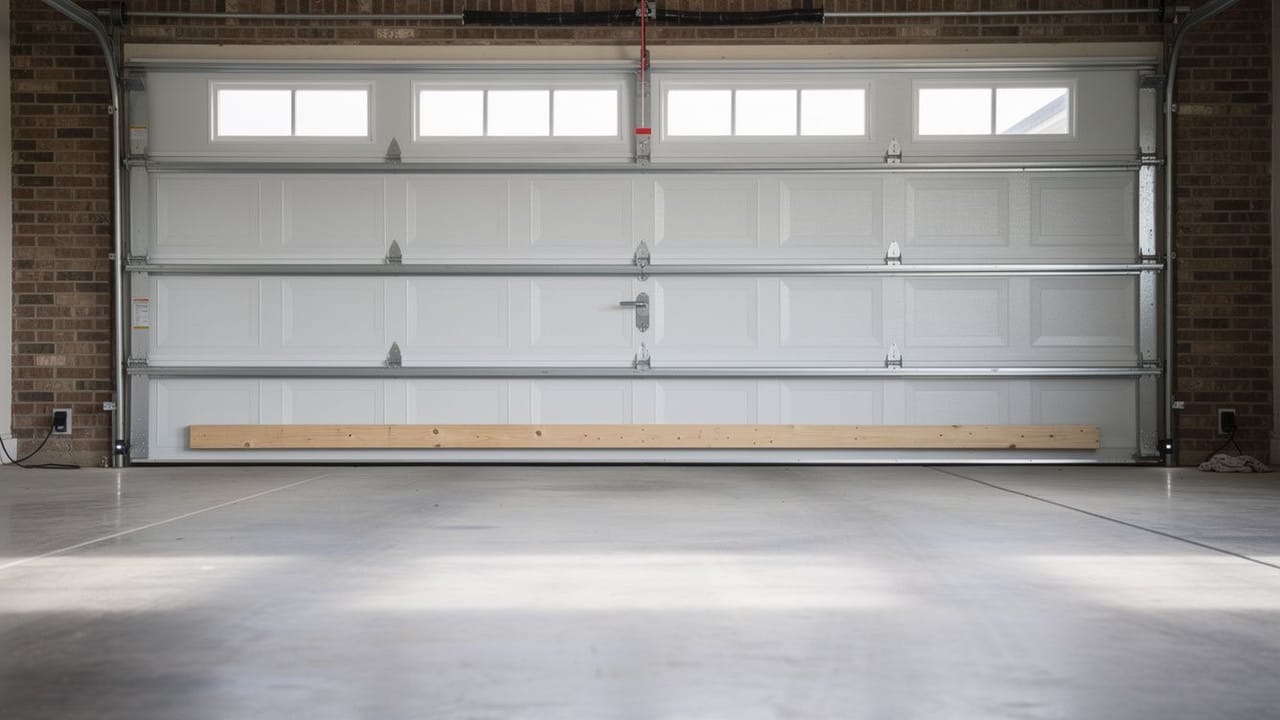
Then the reverse. With the door open, lay a 2x4 flat on the floor in the middle of the opening and close the door from the wall button. The federal safety standard for residential garage door openers requires the door to reverse on contact with a 1 1/2 inch object or a 2 by 4 laid flat, and to start reversing within 2 seconds of contact. Next, close the door again and pass something through the photo-eye beam near the floor; the standard calls for a closing door to reverse and return to fully open when that sensor is triggered. Some openers use an edge sensor on the bottom of the door in place of photo eyes, which the standard also allows, so test whichever yours has. The standard’s instruction to owners is to run the reverse test monthly, not twice a year, and again after anyone adjusts the opener’s force or travel limits. If the door does not reverse, it says to adjust, repair or replace the opener, and Amarr says an opener with no automatic reversing feature should be replaced. That is opener repair work.
Replace the bottom seal
We check the rubber seal along the bottom of the door on every visit. Once the rubber has stiffened or split, it stops pressing against the concrete, and the gap it leaves lets in whatever the wind pushes at the door. How the new seal goes on depends on the retainer your door has, so follow your door maker’s instructions for it, and our post on bottom seals and the gaps they leave covers matching a seal to its channel.
A sound seal is also what keeps rain blown against the door from running in across the garage floor, which matters if you keep anything stored down there. If you would rather we handled the seal, the hardware and both safety tests in one visit, ask us for a free estimate.
Sources
- U.S. Consumer Product Safety Commission, 16 CFR Part 1211, Safety Standard for Automatic Residential Garage Door Operators (eCFR) — Door must reverse on contact with a 1 1/2 inch object or a 2 by 4 laid flat; reversal within 2 seconds; photoelectric sensor or edge sensor; owner instruction to test monthly and retest after force or limit adjustment; adjust, repair or replace an opener that does not reverse
- Amarr, Maintaining and Cleaning Garage Doors and Openers — Routine check twice a year; lubricate moving parts but not plastic rollers or idler bearings; consult the owner’s manual; look over springs, cables, rollers, pulleys and hardware; balance test at 3 to 4 feet; replace an opener with no auto-reverse
- Door & Access Systems Manufacturers Association, TDS #174, Building Occupant: Checking a Residential Sectional Garage Door for Damage — Doors are large, heavy and move on springs under extreme tension; inspect track fasteners, roller brackets and hinges; deformation makes a door questionable; do not touch springs or what they are fastened to; lift slowly and stop if heavy; stop and call a technician when a problem shows
- WD-40 Company, WD-40 Specialist White Lithium Grease — White lithium grease for door hinges, cables and bearings; lists overhead door tracks among its uses
FAQ
The Garage Door Maintenance Nobody Does — questions
What lubricant should I use on a garage door?
Start with the owner’s manual for your door, since it names the product and the parts. Amarr’s guidance is to lubricate the moving parts regularly and to keep lubricant off plastic parts such as plastic rollers and idler bearings. When there is no manual, we use a garage door lubricant or a white lithium grease on the metal hinges and the bearings of steel rollers. On the track, go by the manual, because the advice on it is not the same from one maker to the next.
How do I test the garage door auto-reverse?
Open the door, lay a 2x4 flat on the floor in the middle of the opening, and close it. It should reverse when it hits the board. Then close it again and break the photo-eye beam, and it should go back up to fully open. The federal opener standard says to do the board test monthly and again after anyone adjusts the force or travel limits. Reversal on contact, backed by a photo eye or an edge sensor, is what keeps a closing door from trapping someone underneath.
How often does a garage door need servicing?
A homeowner check twice a year, which is what Amarr recommends, covers lubrication and a look at the hardware, cables and springs, and the reverse test is done monthly. Anything involving the springs, the cables or the brackets they are fastened to goes to a trained technician, which is what the door industry’s trade association advises. We do not put a fixed number of years on a professional visit; a door that fails the balance test, or shows a frayed cable or a loose bracket, needs one now.
What is on a garage door maintenance checklist?
It covers lubricating the metal moving parts twice a year while keeping lubricant off plastic rollers and idler bearings, following the door maker’s manual on the track, and checking hinges, roller brackets and track fasteners. Add a look at the cables and springs without touching them, a balance test, a monthly auto-reverse test and the bottom seal.