
· by Michael Blair, Nashville's Garage Door
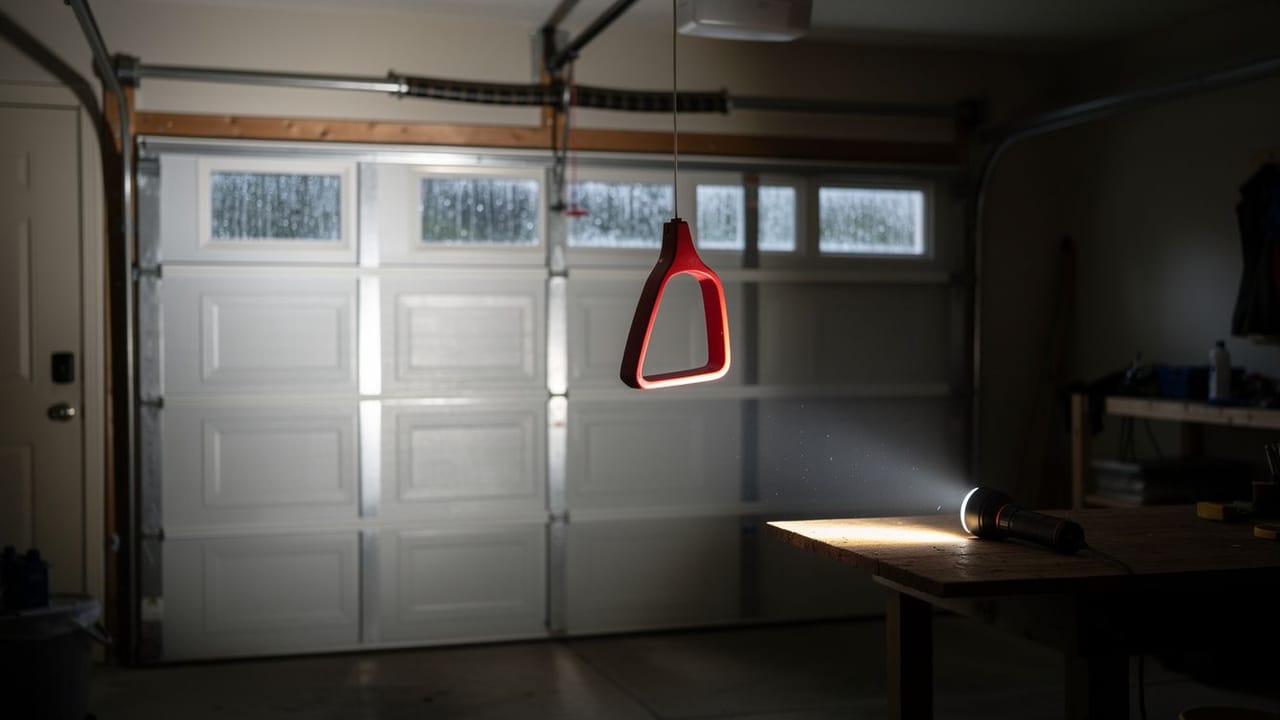
When a storm takes the power out, the opener stops and the door stays wherever it was. The federal safety standard for openers, 16 CFR 1211.9, requires a way to detach the opener from the door by hand, and its handle has to be red and easy to tell apart from the rest of the unit. Whether the door can then be lifted safely is up to the springs, and that is the part worth understanding before you pull it.
Using the release
Look before you pull. DASMA’s technical sheet for homeowners checking a sectional door begins with the door closed and a look at the spring system for loose cables or anything else that has worked loose, and it says not to touch or adjust the springs or whatever they are fastened to. If something looks wrong, the sheet says to stop there and call a trained door technician. If it all looks right, pull the red handle the way the marking beside it shows. The installation instructions the standard requires put that marking on or next to the release, and 1211.9 sets the handle up so that a firm grip and no more than 50 pounds of pull detaches the opener even with the door held down.
Then lift slowly, only a few inches at first. DASMA says to stop if the door starts to move on its own once it is disconnected, or if it is too heavy or hard to move. If it moves freely, keep going while you watch the rollers stay in the track, and stop at any binding or swaying. A door in good order has a balance point, where lifting it takes as much force as closing it, and it should stay up when it is fully open. One that will not is not a door to run by hand. The standard’s owner instructions say an improperly balanced door could cause severe injury or death and leave cables and spring assemblies to a qualified service person, which is the work our spring repair crews do.
When shouldn’t you pull the emergency release?
The first time not to pull it is with the door open. Those owner instructions say to use the emergency release only when the door is closed if possible, and to use caution with it open, because weak or broken springs may allow the door to fall rapidly. If the door is stuck open when the power fails, we would leave it open until the power returns or we can look at it, and the same instructions say never to go under a door that has stopped partway.
The second is a spring or cable that looks wrong. DASMA’s sheet describes doors as large, heavy objects moved by springs under extreme tension, and it says a problem spotted in the visual check means the door should not be operated at all. That is a service call rather than something to force, and our post on garage door springs and when they break covers what wears them out.
- If you can, release it only with the door closed
- Lift slowly, a few inches first
- Stop if it is too heavy, moves on its own or will not stay up
- Loose cables or springs: leave it and call a technician
- Never go under a door that has stopped partway
Re-engaging the opener
DASMA’s advice after a power loss is to wait until the power is restored before reconnecting the opener. How the trolley catches the door again differs from one model to the next, so follow the owner’s manual for yours rather than running the opener over and over in the hope that it will grab. If it still will not connect, that is a fault for our opener repair team, not one to keep cycling.
Once it is connected, DASMA says any lock on the door should be disabled or removed and the reversing feature tested the way the opener maker instructs. The test in the federal owner instructions is a 2 by 4 board laid flat on the floor where the door closes, and the door must reverse when it meets it. We run that check on every tune-up visit, and if your door does not reverse after an outage, leave the opener off and ask us to come out.
What does a battery backup do for a garage door opener?
A battery backup is there to keep the opener working when the power fails, which takes the release handle out of an ordinary outage. How long it runs and when the battery needs replacing vary by model, so the opener’s manual is the place to check. When we replace an opener for a house where the garage is the main way in, or where nobody living there can safely lift a door by hand, a model with a battery backup is the one we suggest, and we show the owner how to test it.
Until then, know where the red handle is. The standard’s installation instructions tell installers to show the homeowner how the manual release works. If nobody ever showed you, try it once with the door closed on a calm afternoon rather than for the first time in a storm.
Sources
- U.S. CPSC, 16 CFR 1211.9, Additional entrapment protection requirements (eCFR) — A means to detach the opener by hand is required; red handle; no more than 50 pounds of force with the door held down
- U.S. CPSC, 16 CFR 1211.16, Instructions (eCFR) — Release marking on or next to the release; use the release with the door closed if possible; weak springs may let the door fall; balance and qualified service; never go under a stopped door; reversal test with a 2 by 4; installer shows the owner the manual release
- DASMA TDS #174, Building Occupant: Checking a Residential Sectional Garage Door for Damage — Look at the spring system first and do not touch it; disconnect with the red handle; stop if the door moves on its own or is too heavy; balance point; stays up when open; reconnect after power returns; locks off; test reversing
FAQ
Opening a Garage Door When the Power Is Out — questions
How do I open my garage door manually when the power is out?
With the door closed, check the springs and cables for anything loose, then pull the red emergency release handle as the marking beside it shows. Lift slowly, a few inches at first. DASMA says to stop if the door is too heavy, moves on its own, or will not stay up once fully open, and to call a trained door technician.
Why is my garage door so heavy to lift by hand?
A door that is hard to lift is not properly balanced, and the springs are what balance it. The federal opener standard warns that an improperly balanced door could cause severe injury or death and leaves spring and cable repairs to a qualified service person, and DASMA says to stop lifting a door that is too heavy rather than adjust anything yourself.
How do I reconnect the garage door opener after using the release?
Wait until the power is back, then follow the owner’s manual for your model, since the steps differ between openers. Once it is reconnected, make sure any lock on the door is off and test the reversing feature as the opener maker instructs. If it will not reconnect after a try or two, stop and have it looked at.
Why is my garage door not working after a power outage?
If the emergency release was used during the outage, the opener is no longer connected to the door and has to be re-engaged. Once power is back, follow the manual for your model rather than cycling the opener in hope, make sure any door lock is off, and test the reversal. If it won’t reconnect or reverse, leave it off.